Care & Maintenance
Expert tips and guidelines for keeping your natural stone and quartz surfaces looking flawless for a lifetime.
Keeping Granite & Marble Beautiful
One of the biggest fears people may have about natural stone is the maintenance it requires. With the public increasingly turning to the use of natural materials in the home, granite has become the countertop of choice for today's homeowners. Synthetic solid surface materials are no match for the richness, depth, and incredible performance of real granite. Unlike laminates and solid-surface materials, a hot pot or frying pan has no effect on granite's mirror-like finish.
The diamond-like hardness of granite makes it virtually impervious to abrasions, stains, and heat. (It's important to note that granite won't stand temperature stress such as fireplaces where the stone expands and contracts in a very short period of time. The seams, however, will prevent cracks.)
Most importantly, by choosing a granite countertop you not only give your kitchen everlasting performance and beauty, but you also increase the value of your home. You'll find caring for your natural stone is easy. Warm water, mild dishwashing liquid, and a soft clean cloth are generally all that's needed.

Basic Prevention & Care
The best care you can give your natural stone is preventive care. Follow these simple suggestions to ensure your countertops last a lifetime.
Avoid Acid & Abrasives
Never use cleaning products with any kind of acid, ammonia, or abrasives. They may cause de-coloration, scratches, or affect the seal on the stone.
No Sitting or Standing
Do not stand, kneel down on, or sit on your countertops. Uneven weight distribution can cause the stone to crack or break around weaknesses.
Protect From Heat
Always use a protective barrier like a trivet or mat under hot pans. Direct heat may cause discoloration (mainly in dark granites) or cracking.
Handling Stains & Residue
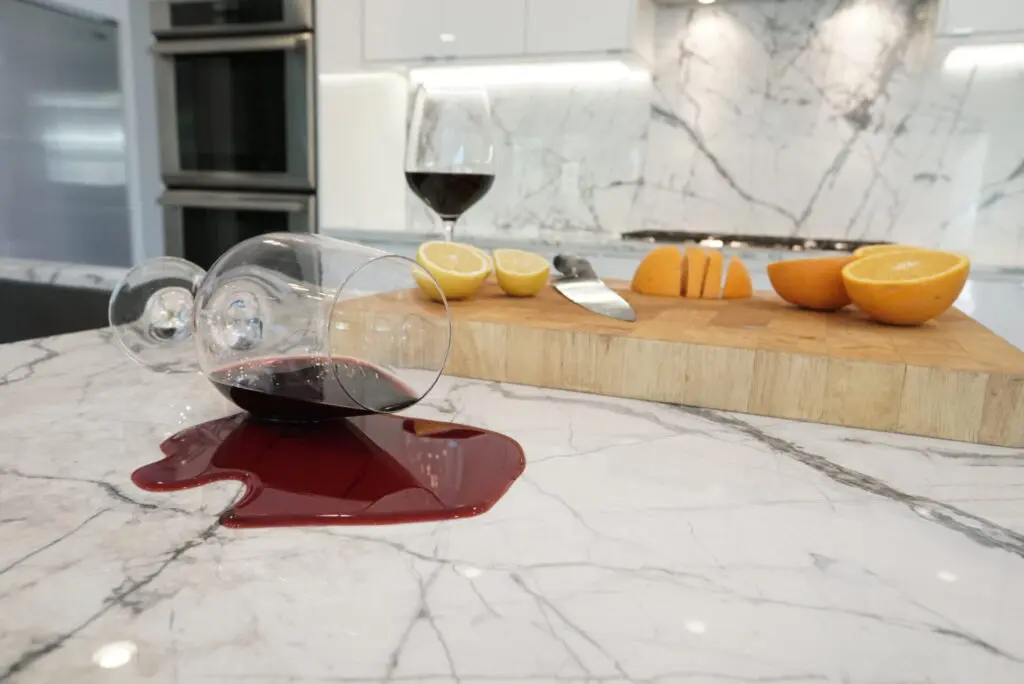
Granite countertops are surprisingly resilient to stains like citric acid, coffee, tea, alcohol, or wine. However, as a preventive measure, wipe up any spills within a reasonable amount of time.
Oil Stains: Granite is most prone to staining by oil. Avoid placing pots with oil traces on the bottom directly on the surface. If an oil stain sets, use a general poultice with baby powder or baking soda and water. Apply a ½" thick paste, tape plastic sheeting over it, and let it sit for 48 hours before rinsing.
Soap Scum & Lime: Granite tends to attract soap scum. Rinse with hot clean water regularly. For lime build-up or dried spills, use a straight razor blade in a gentle scraping motion, or dry steel wool grade 00. Never use lime removal products.
Avoiding Chips: Chips are rare, mostly caused by banging heavy pots into the edge profile. If a chip occurs, hold on to the piece — it can often be epoxied back into place.
The Importance of Sealers
Using a sealer is an excellent preventive measure. Sealers fill in natural pores and repel spills on the surface, radically reducing the rate of absorption and giving you time to wipe away spills.
“In many cases it makes sense to seal marble and granite countertops with a quality sealer... Both resined as well as unresined slabs will outlast most of our lifetimes. Granite should, and in most cases will, be the last countertop surface a person will buy, providing a strong return on investment.”
After the installation process, the granite must be sealed. We recommend a re-application of this sealer annually — or more often for some light granites — to fully maintain luminosity and avoid stains.
Quartz Maintenance
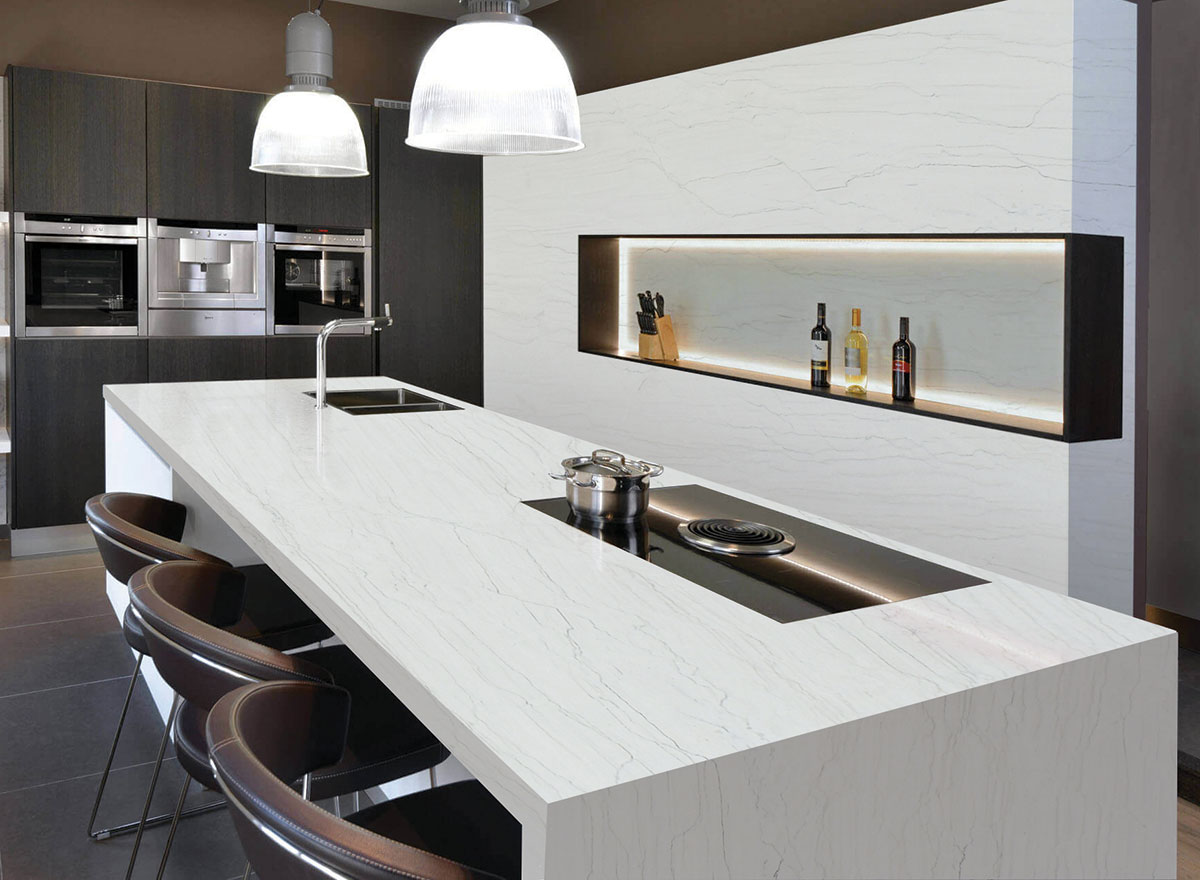
Maintaining Quartz is easy. Simply wash with a soft cotton cloth and warm water, and use a mild soap if desired. However, it is not indestructible.
- Chemical Sensitivity — DO NOT expose Quartz to abrasive, strong alkaline, acid, free radicals, or oxidizing cleaners. Products like bleach, oven cleaners, Comet®, Soft Scrub®, paint removers, and silver cleaners can cause permanent corrosive damage.
- Heat & Fracture Impact — Quartz IS NOT heat proof, chemical proof, or fracture proof. Always use trivets and be aware of damaging exposures.
- No Topical Treatments — DO NOT apply any sealers, penetrants, or topical treatments to Quartz under any circumstances. Such products will just wear off and cause the gloss to appear dull or inconsistent.
Need assistance with maintenance?
If you have questions about caring for your specific material, our team is always here to help.